

The collective anxiety created by the AI-altered Raanjhanaa is quite understandable : a production house (Eros International) using artificial intelligence to resurrect Dhanush’s character in order to make Anand L Rai’s movie ending less tragic and more “re-releasable” creates a dangerous precedent. Yet, it’s just a small sample of the slippery slope taken by film industries across the world, and in the case of Tamil cinema, mostly since 2023. AI is not only used to resurrect fictional characters but also, to bring back to life real but deceased artists on screen.
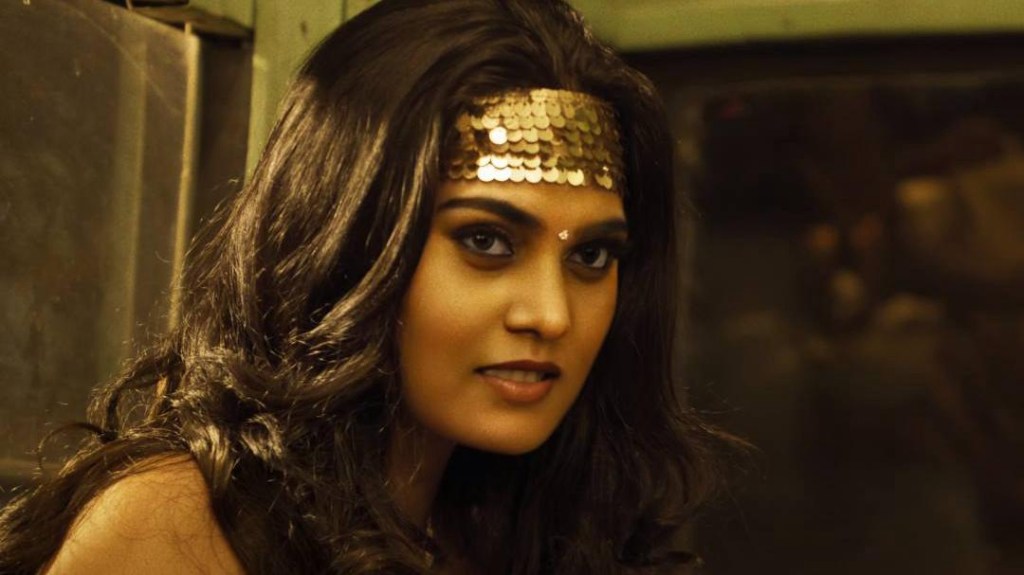
Think about how fast this disturbing “trend” is expanding in the creative context of Tamil film industry for the last couple of years. Silk Smitha in Mark Antony, Vivek in Indian 2, Vijayakanth in The Greatest of All Time for instance, made troubling posthumous “cameo” appearances, while Bamba Bakya and Shahul Hameed in Lal Salaam, Malaysia Vasudevan in Vettaiyan “sang” beyond death.
But why then ? How can we explain this urge to resurrect dead artists ?
First, AI can be a last recourse when actors die while a movie is still in the making. That’s how Shankar chose to use AI for the portions left to film for Vivek’s character in Indian 2, after his demise. Of course, Hollywood is normalizing this practice for more than a decade now : Paul Walker was partially recreated in Fast&Furious7 after his brutal car accident in 2013, Carrie Fisher was integrated in Star Wars 9 after her death, because, how to imagine the saga, without Princess Leia, right ?
But most of the times, the core reasons are different. Recreating the dead in image and sound, is promoted as a modern cinema prowess, a technological stunt, the “magic of AI” is supposed to leave the audience awestruck. And obviously, it creates an emulation in Tamil film industry.
Then, bringing back to life actors and singers who are part of the collective imaginary of Tamil audience, also nourishes a storytelling beyond the film, it’s rooted in existing mythologies. Creating an AI ‘Captain’ in Venkat Prabhu’s The GOAT was quite meaningful, politically and emotionally, as Vijay and Vijayakanth, shared not only a special bond (filiation?) since the early 1990s but also a parallel career arc, from cinema to politics. Similarly, making Malaysia Vasudevan “sing” Vettaiyan’s hero introduction song, Manasilaayo wasn’t an insignificant choice as his voice is intimately linked with Rajinikanth’s career and his rise as Superstar in the 1980s.


Above all, these AI recreations are always justified and promoted as “tributes” to the deceased, maybe because the main fuel of this “resurrecting the dead” trend is nostalgia, a yearning for the past shared by the makers and the audience. Of course, hearing Malaysia Vasudevan’s voice is a pleasant time travel to the 1980s. Of course, seeing Silk Smitha appear on screen triggers the nostalgic male gaze of older spectators who remember their youth and younger spectators who fantasize the good old objectification. Of course, ARR used the hashtag “nostalgia” to share his AI-generated Bamba Bakya-Shahul Hameed song. No doubt this “nostalgic touch” is, above all, a major marketing tool for these movies.

Where is the problem ?, would ask those who advocate that “AI is the future” and that “we can’t fight it’. After all, artists want to leave a mark after their death, and AI seems to be the perfect mean for them to achieve a kind of immortality. Yes, Silk Smitha, Vivek or Malaysia Vasudevan certainly wanted to be remembered for their work, but, would they have wanted their image, their voice, their body language to be recreated and used after their death? Here is the tragic truth. We don’t know and we’ll never know, because the dead can’t speak.
When he was criticized for using the voice of deceased singers, ARR tweeted : “We took permission from their families and sent deserving remuneration for using their voice algorithms technology is not a threat and a nuisance if we use it right”. But the use of AI to recreate dead artists raises the question of active consent, the question of the rights of these late artists, because it could make them say or do things they have no choice about. What if the family don’t respect the artists choices ? What happens where there is no more family ? Who owns the rights on someone’s image, voice, acting or singing, after their death ?
Moreover, by making the dead work again and again, AI technology seems to achieve the ultimate goal of capitalism. An eternity of work. A never-ending exploitation, even beyond death. AI technology is materializing this dystopian capitalist dream, and it’s quite frightening. What’s the use of spreading the usual “RIP” all over social media when our most favorite artists die, if these artists could actually never REST (in peace) ?
And what’s the impact on the living artists? I am thinking about those who could eventually loose their jobs because of the AI technology (which was the main concern of the SAG AFTRA strike in Hollywood in 2023), but also about those who have to “body-double” to make the AI resurrection possible. For instance, it was Kovai Babu who was Vivek’s double in Indian 2 ; it was Vishnupriya Gandhi who was the Silk Smitha’s double in Mark Antony, and the one who is actually credited. Similarly, it was Malaysia Vasudevan son, Yugendran, who sang his father’s parts in Manaasilayo, before they AI-modified his singing. What about them ? Will these shadow actors/singers become a kind of new proletariat of cinema, in this nascent AI era ?
Above all, beyond the ethical issues, the use of AI to resurrect the dead reveals a deeper truth of the neo-liberal and capitalist dystopia we are sinking in. A collective reluctance to accept death, to accept mortality (even of fictional characters), to accept the human condition.
Maybe the real tribute is not recreating artificial on screen-zombies and exploiting artists after their death. Maybe the ultimate respect would be to explore, celebrate and question the artistic work they have created during their lifetime.
FIN.
Shakila Zamboulingame


 1916 / about tamil cinema
Leave a comment